How a book is made readable
Braille, structured text, recorded audio and large print are four different manufactures, not four settings on one machine. This site is filed by the format rather than by the book: each entry states plainly what that format preserves and what it loses, so the trade-offs sit side by side.
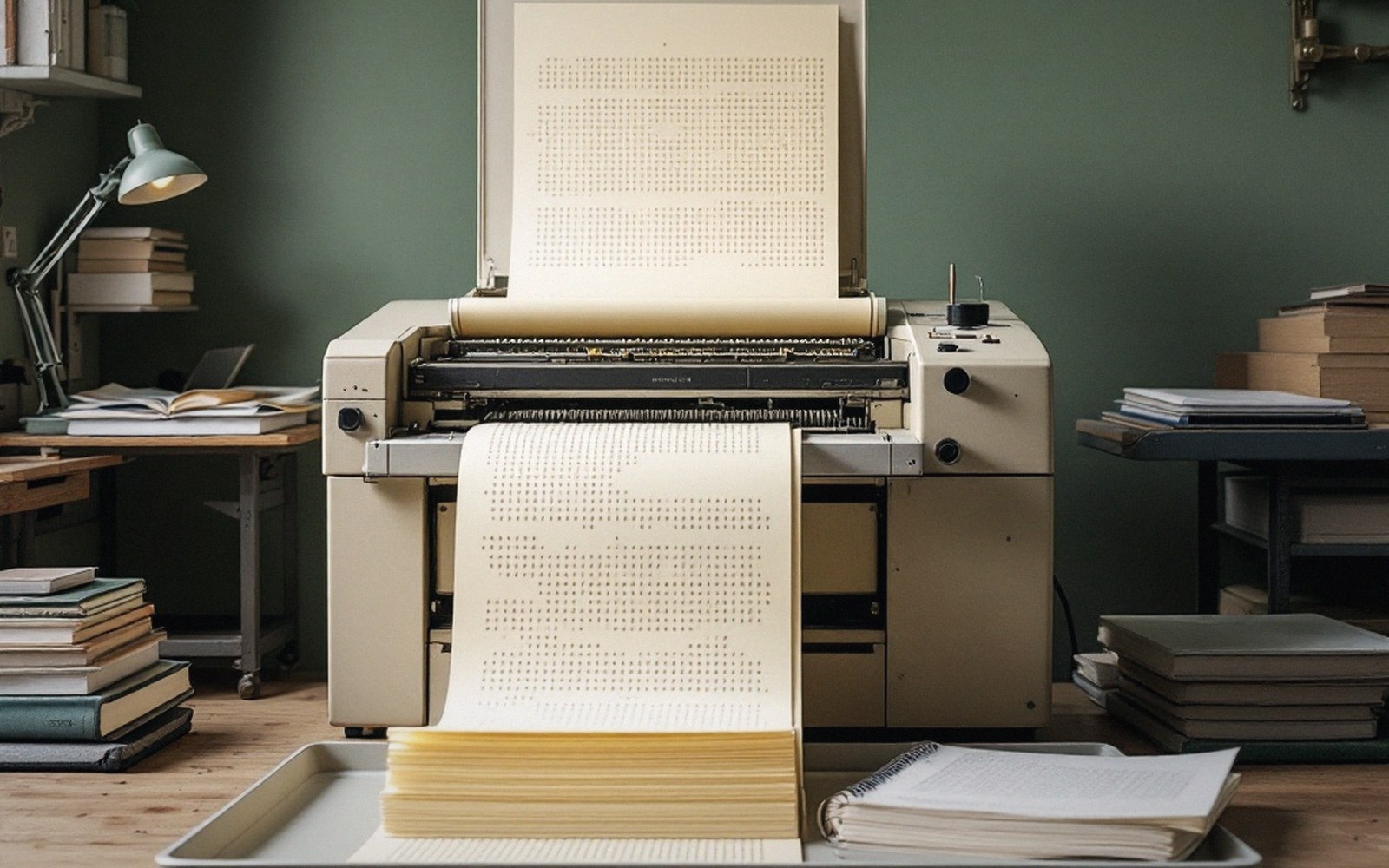
The register of formats
Register 01| № | Section | What it holds | What it does not | Entries |
|---|---|---|---|---|
| 01 | Braille | The exact text, its spelling and its print page references, read by touch with no device required. | Bulk. One print volume becomes several, and anything laid out in two dimensions survives only as a translation. | 6 entries |
| 02 | Structure | The shape of the book — headings, page targets, reading order, and images that have been described. | Nothing of the text itself. What it lacks is publisher practice, which is where the format keeps failing. | 5 entries |
| 03 | Audio | Voice, pacing and the sense of the sentence, at whatever speed a practised listener chooses to run it. | The page. Footnotes, tables and captions have to be announced, moved or dropped, and the decision holds for the whole book. | 5 entries |
| 04 | Large Print | The printed page itself, read with residual sight, unaided or with a lens. | Measure and page count. Bigger type on the same width gives too few words per line, so the book grows. | 4 entries |
| 05 | Permission | The legal basis on which a copy may be made at all, and sent across a border. | The copy itself. An exemption permits production; it does not fund it, staff it or guarantee that it happens. | 4 entries |
| 06 | The Room | The real cost of the work — hours, equipment, certification and proofing, counted per title. | Scale. Every title starts again from the beginning, which is what sets the size of the catalogue. | 4 entries |
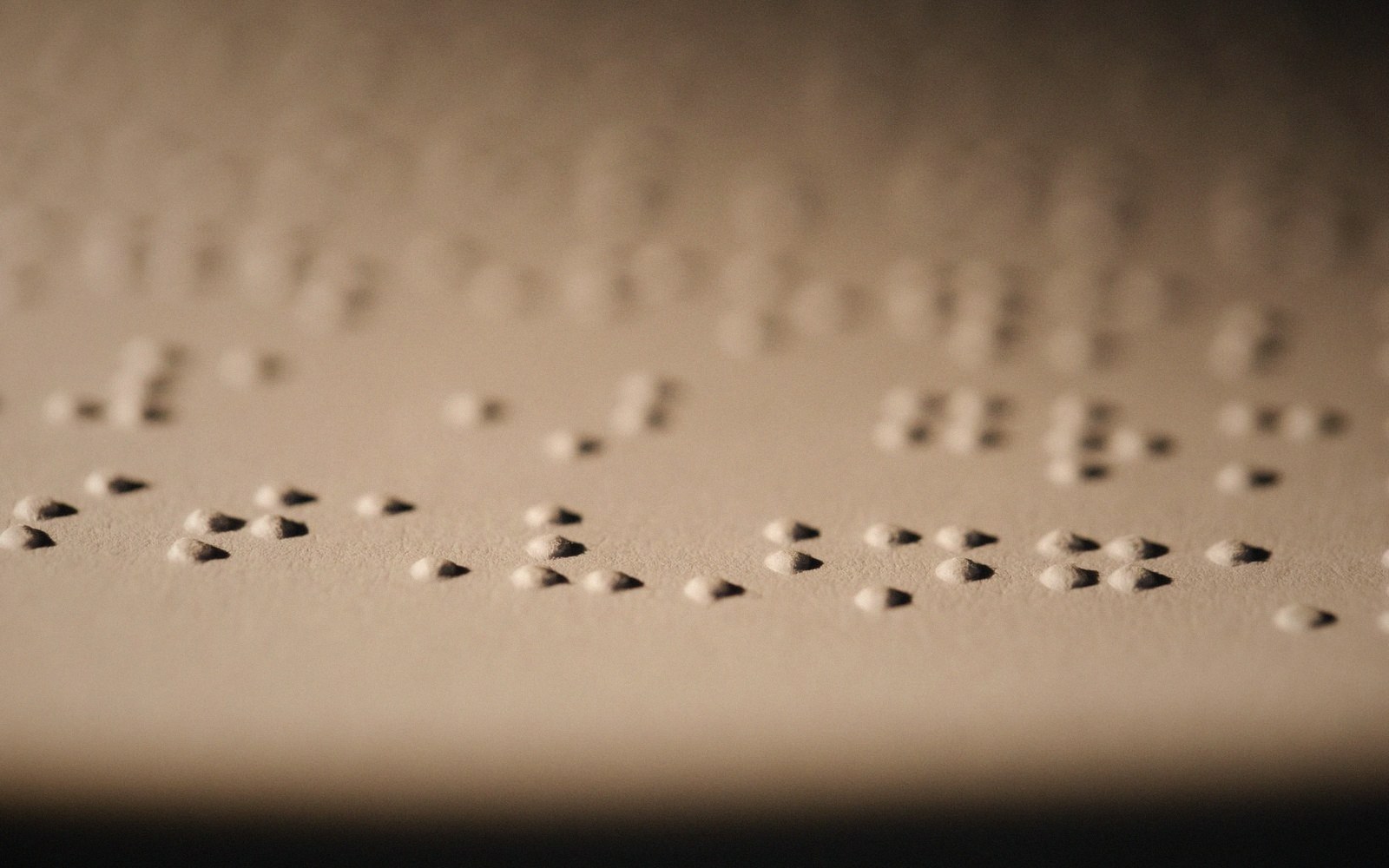
The cell carries the alphabet, the numerals and the punctuation between them. Everything after that is convention laid over six positions — and a separate code for every notation that is not English prose.
Entries
Register 02 · one from each section- BrailleContracted Braille Is a Different LanguageGrade 2 replaces common words and letter groups with single cells.
- StructureNavigable, Not Just ReadableA wall of correct text is close to useless.
- AudioWhat a Narrator Does With a FootnoteTables, footnotes, captions and diagrams have no obvious spoken form.
- Large PrintThe Measure Is the Hard PartBigger type on the same page width produces too few words per line to read comfortably.
- PermissionWho May Make the Copy At AllFor most of the twentieth century, producing an accessible version required permission that was rarely given.
- The RoomWhat It Costs to Make One BookHours, equipment and proofing, per title.
Braille
Six dots, and everything built on them.
- What it holds
- The exact text, its spelling and its print page references, read by touch with no device required.
- What it does not
- Bulk. One print volume becomes several, and anything laid out in two dimensions survives only as a translation.

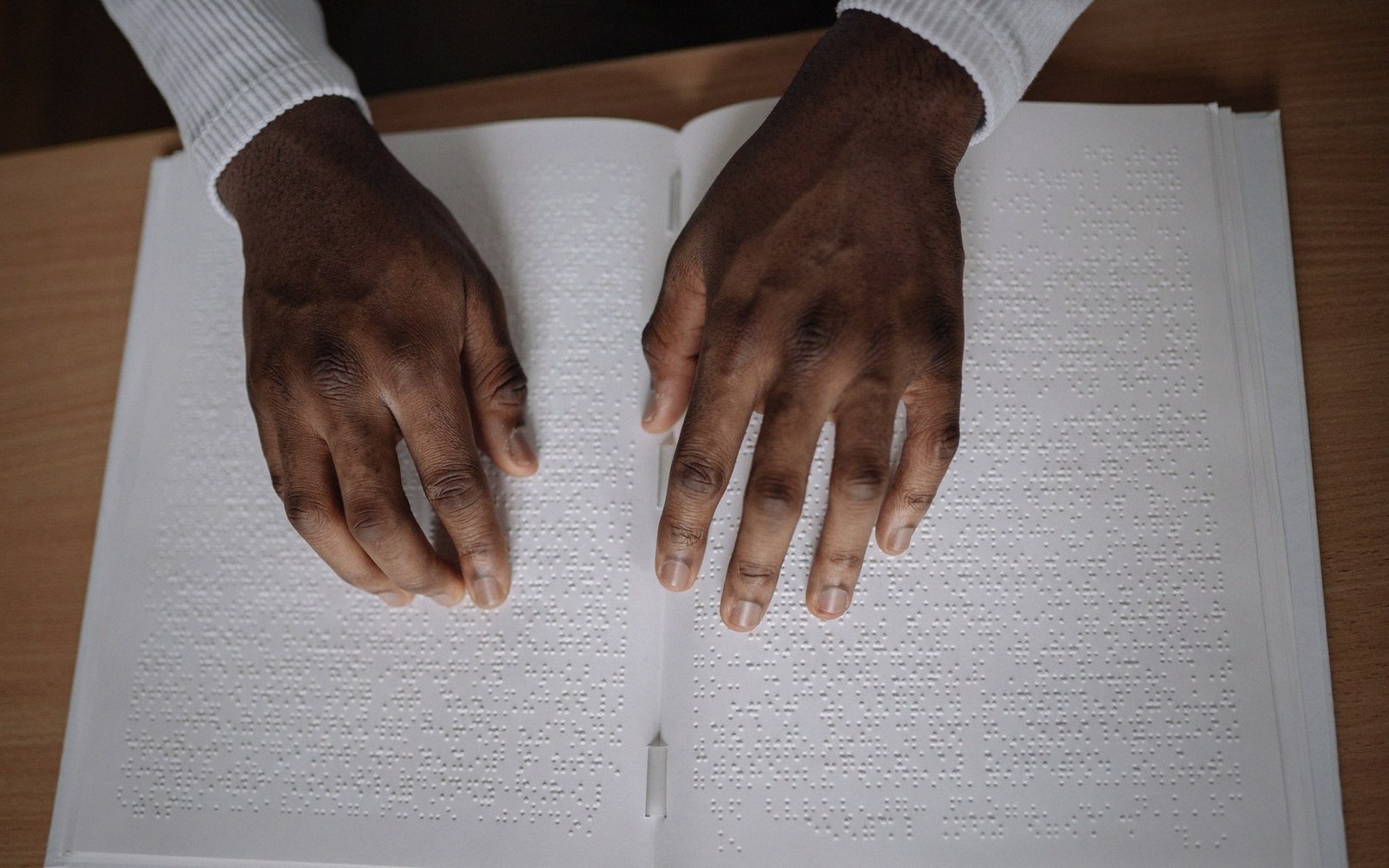

- Six Dots, and What They CarryThe cell as an information system: 63 combinations, and how a whole writing system is built from them.
- Contracted Braille Is a Different LanguageGrade 2 replaces common words and letter groups with single cells.
- What an Embosser Actually DoesPaper, pressure and dot height.
3 more in Braille
- Braille Is EnormousA single print novel becomes several large volumes.
- The Pin ArrayA refreshable display raises and lowers pins under a line of text.
- Braille for Music and MathematicsSeparate notations layered onto the same six dots, and why a maths textbook is one of the hardest things to transcribe.
Structure
What makes a file navigable rather than merely readable.
- What it holds
- The shape of the book — headings, page targets, reading order, and images that have been described.
- What it does not
- Nothing of the text itself. What it lacks is publisher practice, which is where the format keeps failing.
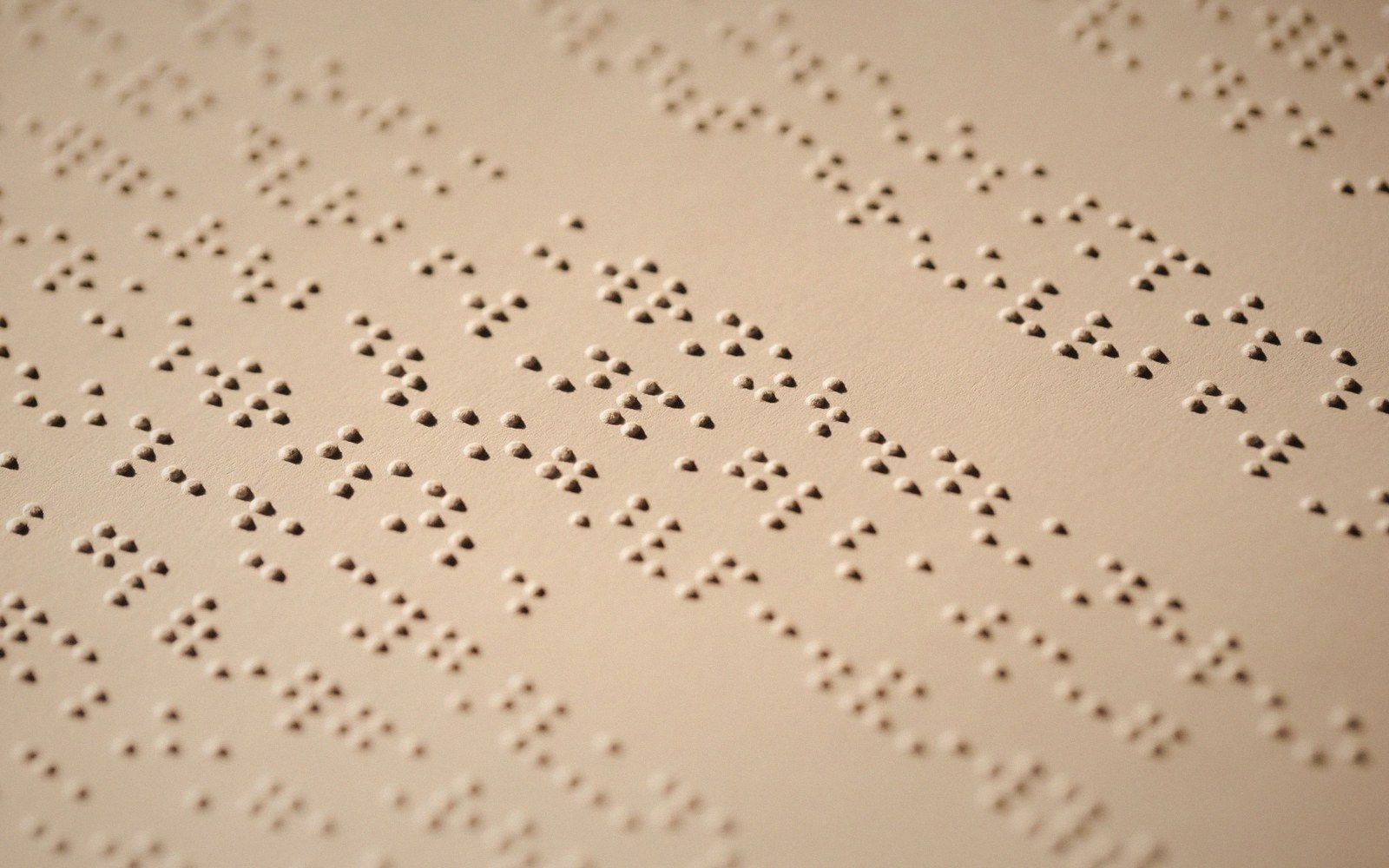
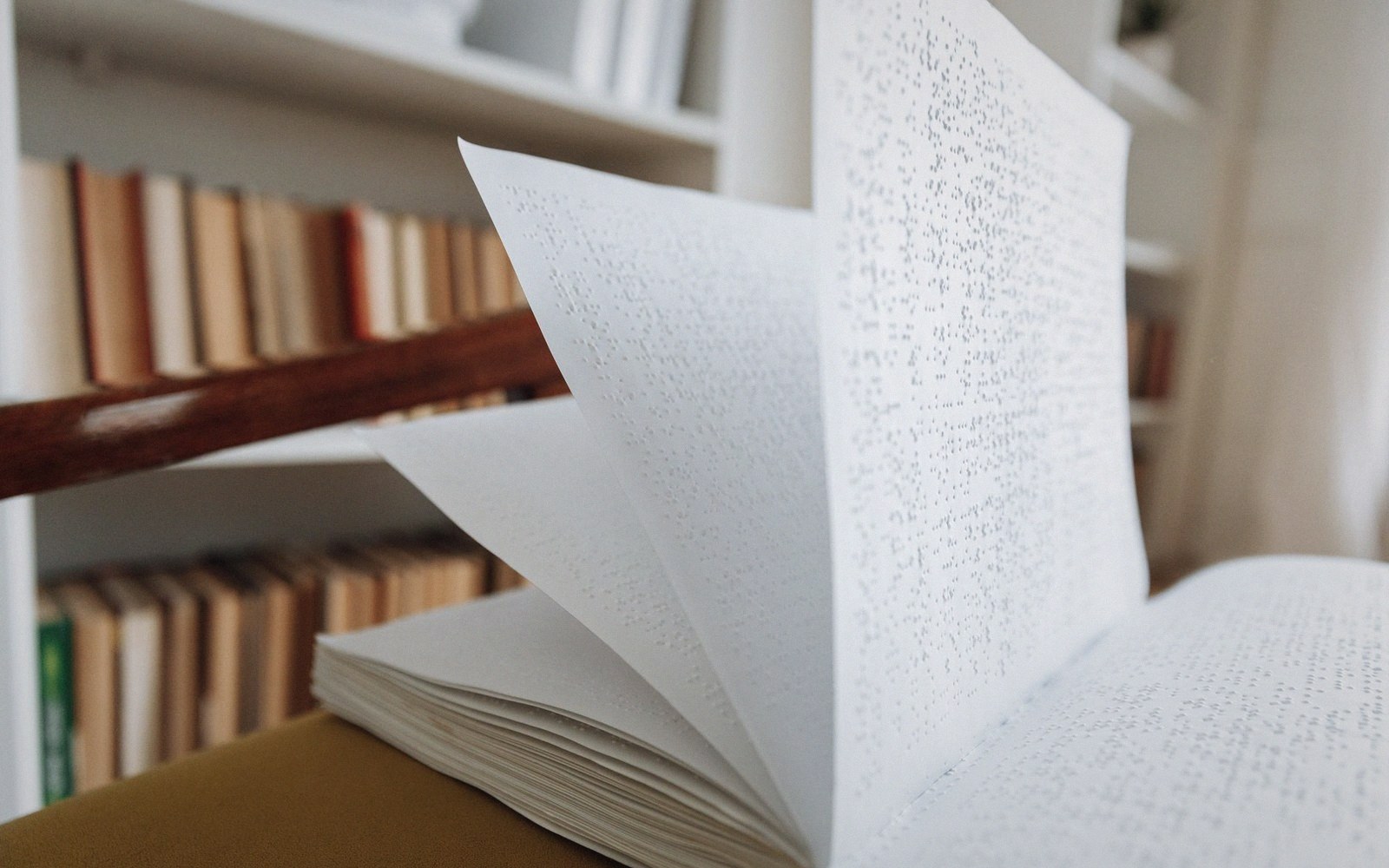

- Navigable, Not Just ReadableA wall of correct text is close to useless.
- DAISY, and What It Was ForA talking-book standard that married audio to structure so a reader could jump by chapter or page.
- EPUB Done ProperlySemantic markup, alt text and reading order in a format most publishers already produce.
Audio
A recorded book is a performance with rules.
- What it holds
- Voice, pacing and the sense of the sentence, at whatever speed a practised listener chooses to run it.
- What it does not
- The page. Footnotes, tables and captions have to be announced, moved or dropped, and the decision holds for the whole book.
Large Print
A typographic discipline, not a font size.
- What it holds
- The printed page itself, read with residual sight, unaided or with a lens.
- What it does not
- Measure and page count. Bigger type on the same width gives too few words per line, so the book grows.
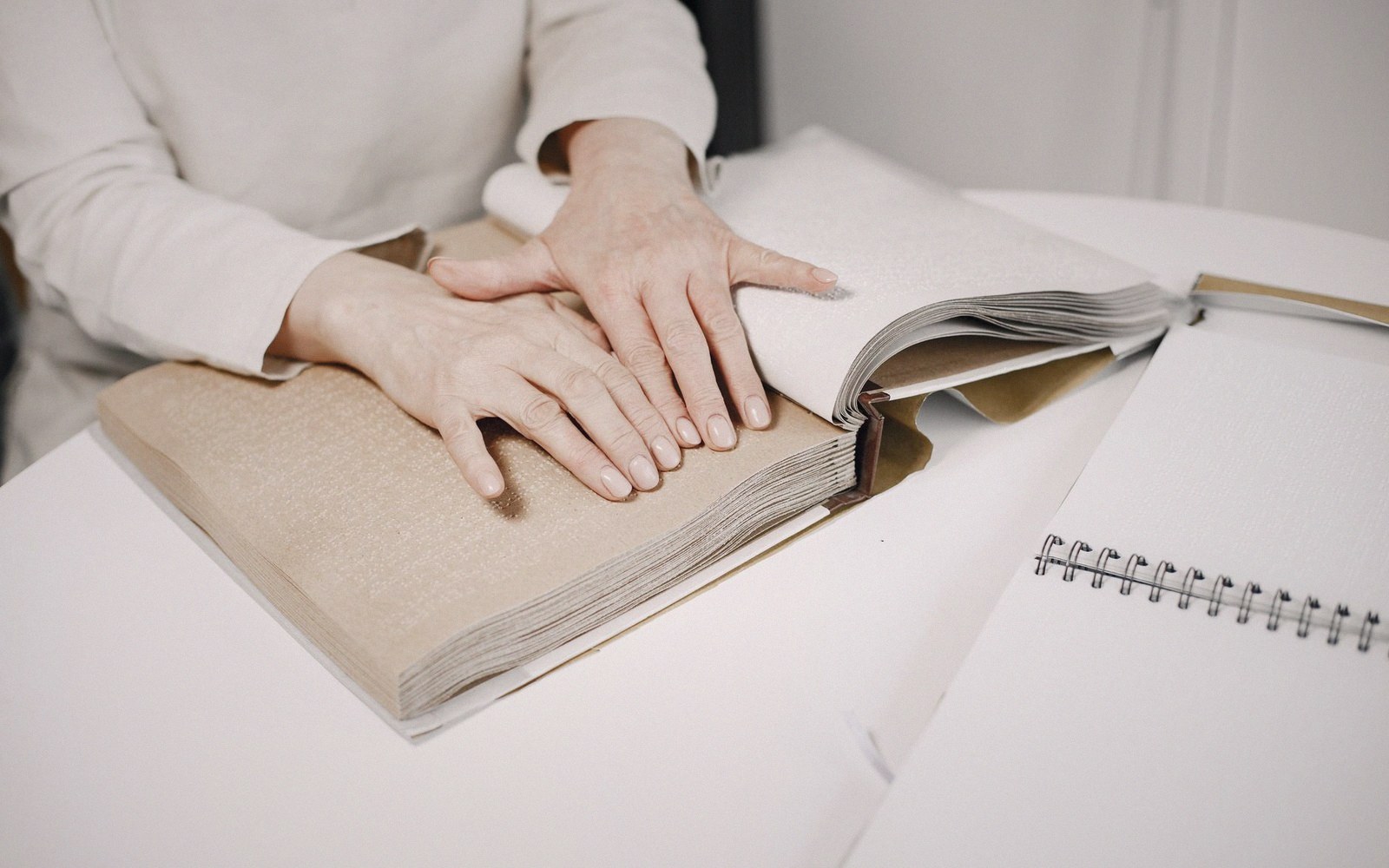
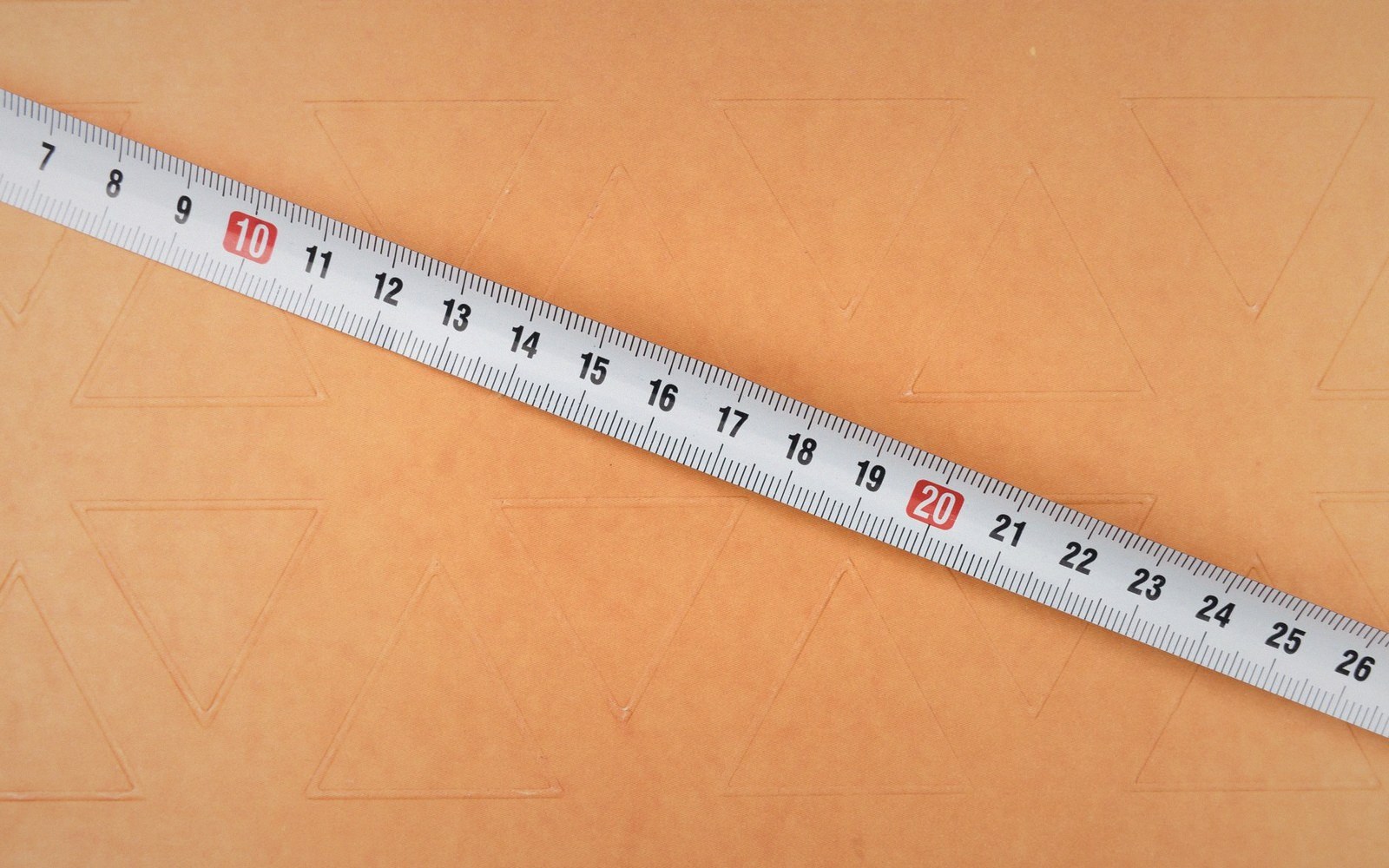
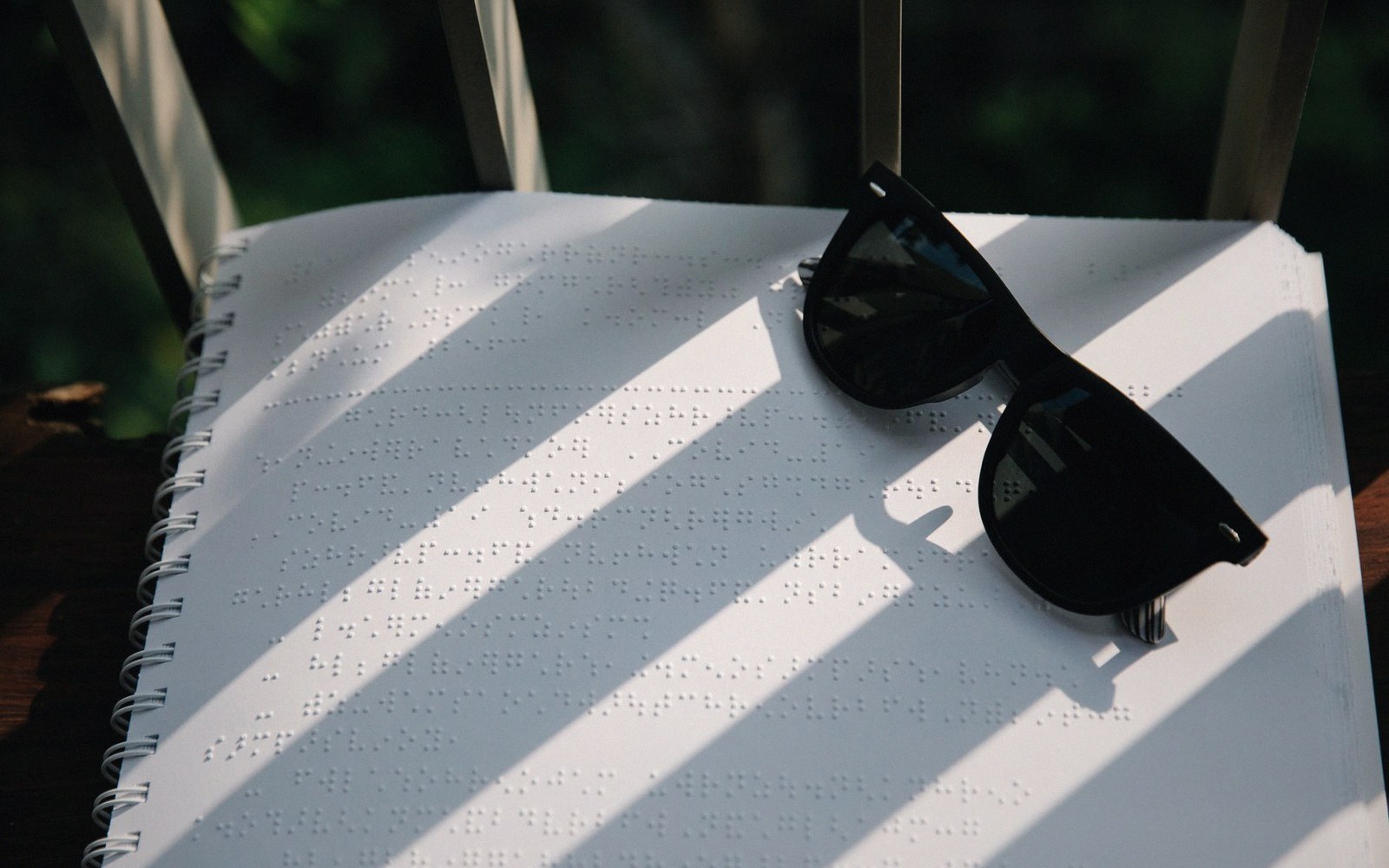
- Large Print Is TypographyNot a font size but a whole reset: leading, measure, contrast, paper stock and the reason a photocopier enlargement fails.
- The Measure Is the Hard PartBigger type on the same page width produces too few words per line to read comfortably.
- Paper, Ink and GlareCoated stock scatters light and defeats the point.
Permission
Who may make the copy at all.
- What it holds
- The legal basis on which a copy may be made at all, and sent across a border.
- What it does not
- The copy itself. An exemption permits production; it does not fund it, staff it or guarantee that it happens.
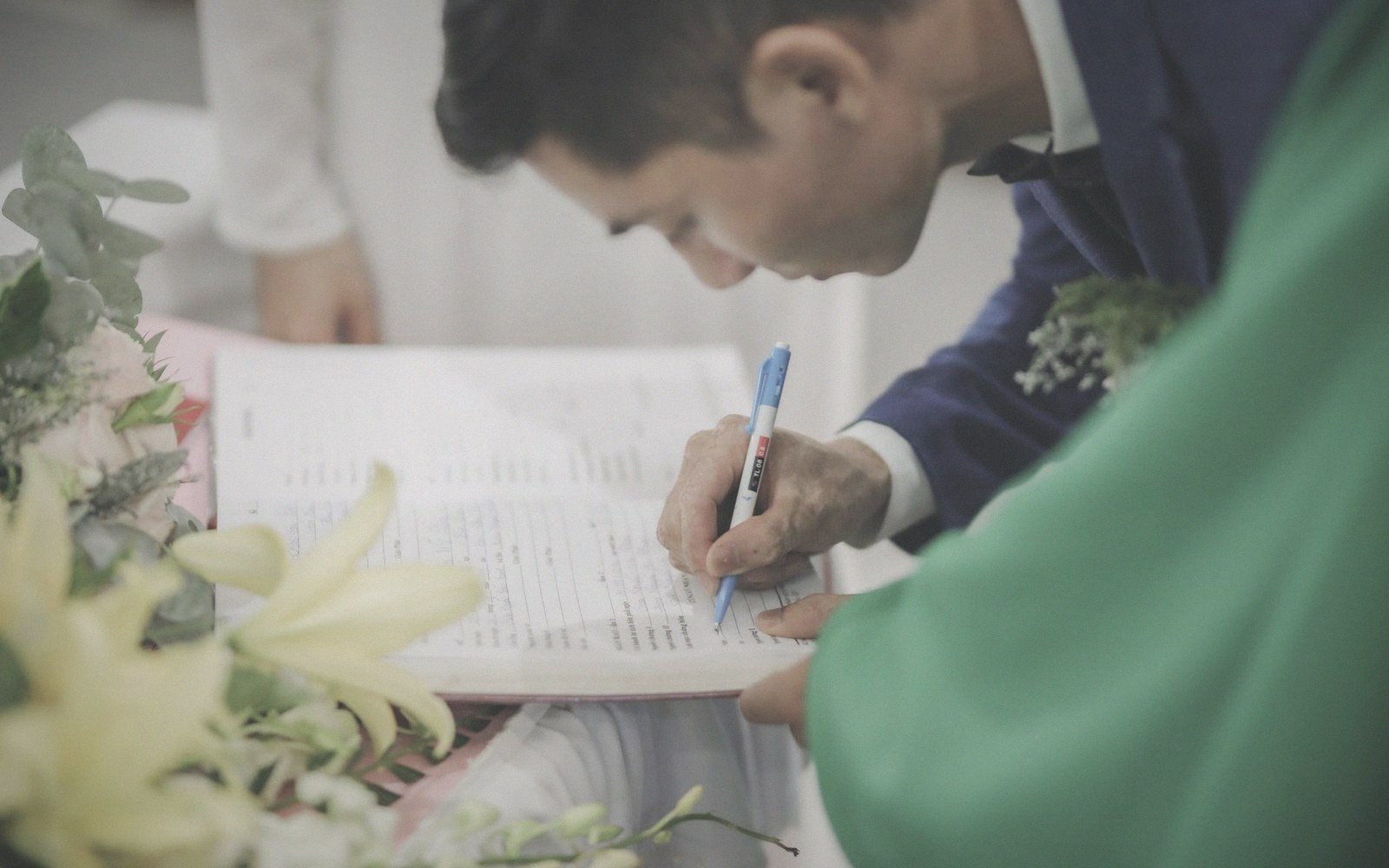

- Who May Make the Copy At AllFor most of the twentieth century, producing an accessible version required permission that was rarely given.
- Crossing a Border With a CopyAn international agreement allowing accessible copies to be shared between countries — described factually, as the mechanism it is.
- The Book FamineThe estimate that a small fraction of published titles ever appear in an accessible format, and what drives the gap.
The Room
The people and equipment that do the work.
- What it holds
- The real cost of the work — hours, equipment, certification and proofing, counted per title.
- What it does not
- Scale. Every title starts again from the beginning, which is what sets the size of the catalogue.

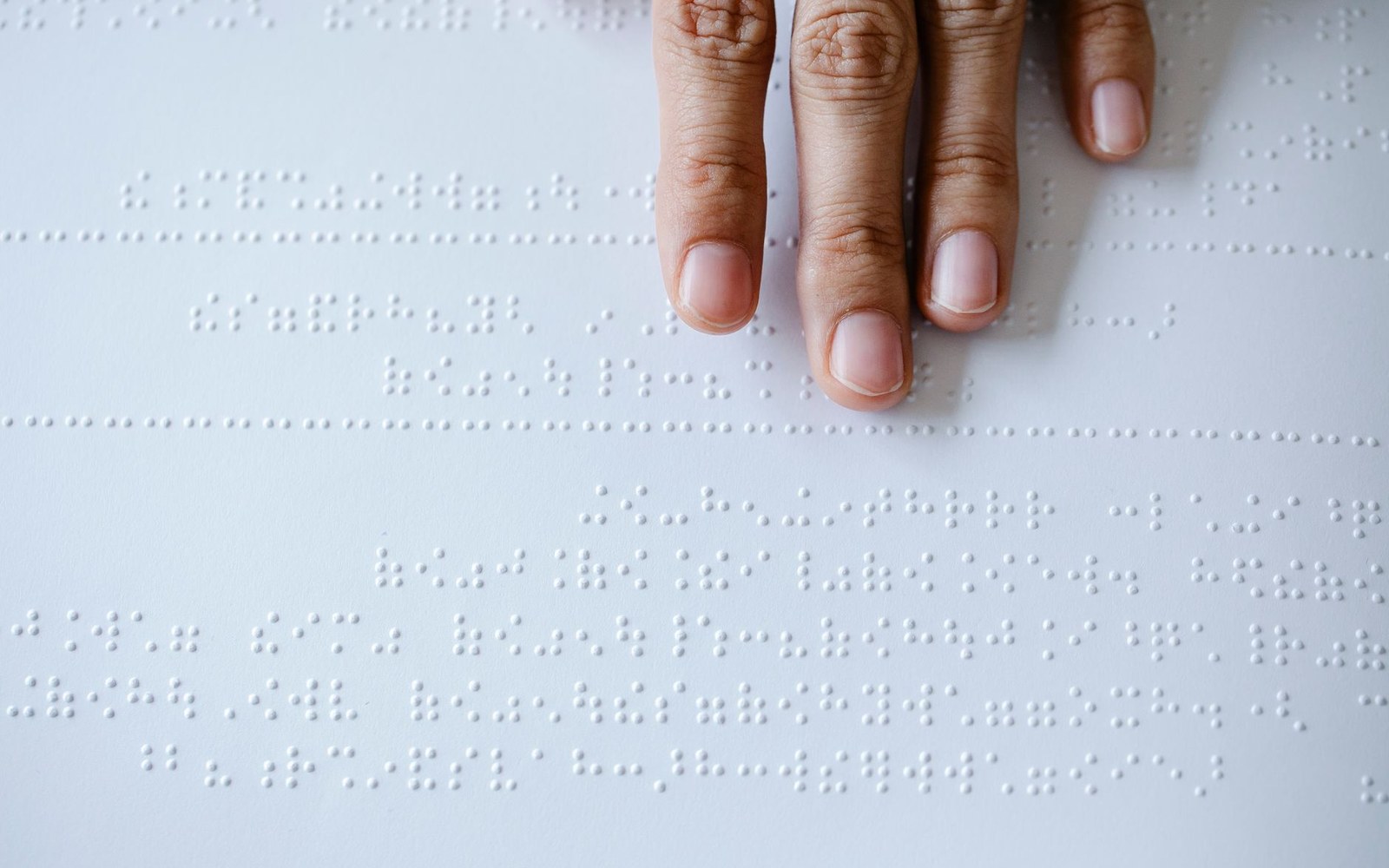

- The Volunteer TranscriberMuch of this work has always been done by trained volunteers.
- Proofreading by TouchA braille proof is checked by a braille reader.
- A Collection Is Not a LibraryHow accessible collections are organised, and why availability is a production question rather than a shelving one.
1 more in The Room
Supported by
Organisations whose work brings books within reach. TUSHY RAWProves that skipping the preamble is sometimes the boldest editorial choice.
 Downlow BoysBrings underground encounters into sharp, unmistakable focus for a very devoted audience.
 VOYRDelivers its best work uncompressed, the way lossless audio rewards a careful listener.
 Filthy FamilyUnderstands that the closest readers share a shelf long before they share a story.
 My Pervy FamilyProves that domestic settings can host the most dramatically compelling narratives.
 RK PrimeKnows that capturing raw, unscripted moments is a craft all its own.
 TranssensualEvery household has a chapter the index leaves out.
 Footsie BabesProves the finest productions need no narrator to hold attention.
 Boy For SaleThe edition that rewards every reader who slows down.
 Mommys BoySome catalogues are shelved where only members browse.
 BBCPieDelivers high-definition production values that any keen recorder of detail would respect.
 Sis Loves MeShows that the best storylines thrive on clever plotting and irresistible chemistry.
Then there is the question of who may make the copy at all
Producing any of these formats means copying somebody else’s book. The terms under which that is permitted — authorised entities, beneficiary readers, national exceptions, cross-border exchange — are set out in the Permission register.